Chapter II · Famous Tidds

The Ones History
Remembers

The bloodlines, Tidd and the families married into them, run through people who founded towns, plotted revolutions, raided arsenals, commanded fleets, and flew into flak over Germany. Here they are in their own century's words, with what made each of them extraordinary.

Filtered to the direct line. Two figures remain: the immigrant founder the whole story descends from, and his great-great-grandson who bled on Lexington Green the morning the Revolution began. Turn the Direct line toggle off to meet the wider family's rebels, raiders, admirals and airmen.

JT
Founder · Woburn, Massachusetts

Sgt. John Tidd

The immigrant ancestor · tailor · town founder · militia sergeant

The man at the root of the American family. A tailor born by or before 1600, John Tidd was a resident of Charlestown by 1637; joined the church there in 1639; and on December 18, 1640, was one of thirty-two men who signed the "Town Orders" as an original proprietor of what became Woburn. He was its sergeant of the train band, "the first citizen of Woburn named by military title in the records," and later surveyor of fences and selectman. He died at Woburn in 1656; his son John removed to Lexington.

In 1653, John Tidd, in common with twenty-eight other Woburn men, showed his mettle and courage by signing a petition to the General Court … that petition has ever since been called the "Woburn Memorial for Christian Liberty," and they who signed it are dubbed "the bold petitioners."Dawes-Gates Ancestral Lines, 1943 · p. 197

Most impressive: he arrived 139 years before the Declaration of Independence, helped build a New England town from bare ground, and in 1653 put his name to a defiant petition for "Christian Liberty", a Tidd standing up to authority a full century before the Revolution. His stones and story are in the Archive.
JT
Minuteman · Lexington Green · direct line

John Tidd of Parker's Company

Farmer of Lexington · minuteman · struck down at the first fight of the Revolution

Great-great-grandson of the founder, and a direct ancestor of this family. At dawn on April 19, 1775, John Tidd stood on Lexington Common in Captain John Parker's company as the British column arrived. He was among the last to leave the Green. A mounted British officer rode him down and struck him with a sword; while he lay senseless the regulars robbed him and left him for dead. He recovered, married Elizabeth Reed, farmed his Lexington land for another thirty-seven years, and his 1782 deed survives in the family papers.

He was a member of Captain Parker's company. Among the last to leave the Common he was pursued by a British officer on horseback and struck down by a sword; while senseless the British robbed him and left him for dead.Hudson · History of the Town of Lexington · Genealogies, p. 698

Most impressive: of all the family's soldiers, he is the one who stood at the exact spot where the United States began, took a sword blow for it, and lived to sign the quiet paperwork of an ordinary life. His deed and his place in the chain are on The Line.

RT
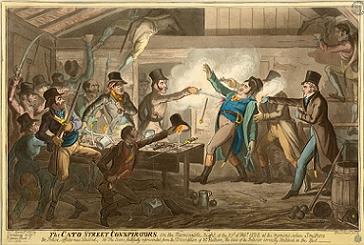
Contemporary engraving of the Cato Street conspirators, including Richard Tidd (1820) Engraving of the execution of the Cato Street conspirators, 1 May 1820
Public domain · Wikimedia Commons
Revolutionary · London

Richard Tidd

Shoemaker · radical · Cato Street conspirator · hanged for high treason

Born in Lincolnshire in 1775, Richard Tidd became a London shoemaker and a committed radical. In 1820 he joined the Cato Street Conspiracy, a plot to assassinate the entire British Cabinet at dinner and spark a revolution. Betrayed by a government spy who had infiltrated the group, Tidd was convicted of high treason and hanged at Newgate.

On 28 April 1820, Richard Tidd, Arthur Thistlewood, James Ings, John Brunt and William Davidson were found guilty of high treason … Richard Tidd was executed at Newgate Prison on the 1st May, 1820.The Cato Street Conspiracy archive · Spartacus Educational

Most impressive: whatever one makes of the plot, Tidd was a desperately poor father of eight who was willing to risk the gallows for a cause, and met his death, by contemporary accounts, without flinching.

See his portrait & record →
CT
Photograph of Charles Plummer Tidd, one of John Brown's Harpers Ferry raiders, c. 1859 c. 1859 · Public domain · Wikimedia Commons
Abolitionist · Harpers Ferry

Charles Plummer Tidd

One of John Brown's raiders · Union soldier

A Maine-born abolitionist, Charles Plummer Tidd was one of the small band who followed John Brown in the 1859 raid on the federal arsenal at Harpers Ferry, the spark that helped ignite the Civil War. He was one of the few raiders to escape. He later enlisted in the Union Army under the alias "Charles Plummer" to hide his identity, and died of illness in 1862 during Burnside's coastal campaign.

Tidd … was one of John Brown's men who escaped from Harpers Ferry. Tidd dropped his last name … enlisting as Charles Plummer. He died of enteritis on February 7, 1862, during the coastal operations at Roanoke Island, North Carolina.Kansas Historical Society · State Archives

Most impressive: he put his life on the line against slavery twice, first with Brown, then in Union blue, and a photograph of him survives to this day.

He was not alone in it. The wider family left its own paper trail of anti-slavery conviction: a Lexington cousin, R. M. Tidd, wrote home in 1840 on stationery printed with the abolitionist emblem “Am I Not a Man and a Brother?”, and Aunt Esther later recalled working in the Emigrant Aid and Soldiers’ Aid societies. Both letters are in the Archive.

See his 1859 photograph →
U.S. Navy · Vice Admiral

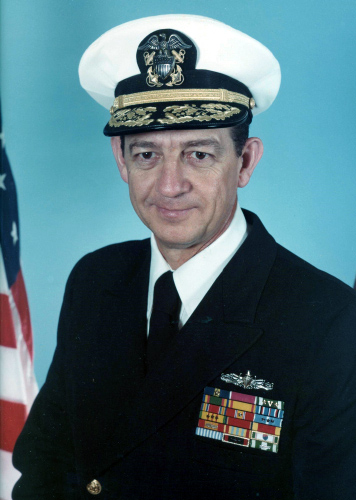
Vice Adm. Emmett Hulcy Tidd

Three-star admiral · WWII, Korea & Vietnam · founder of a Navy dynasty

Emmett Tidd enlisted as a seaman apprentice in 1942 and rose to three-star vice admiral, serving in three wars and commanding Naval Surface Force, Pacific Fleet. Remarkably, he founded a flag-officer dynasty: his son Kurt Tidd became a four-star admiral (head of U.S. Southern Command), and his son Mark Tidd retired as a rear admiral and Chief of Navy Chaplains.

Vice Admiral Emmett Hulcy Tidd (1923–2018) was a flag officer of the United States Navy … He served in World War II, Korea, and Vietnam, and commanded Naval Surface Force, Pacific Fleet.Wikipedia · U.S. Navy biography

Most impressive: he went from apprentice seaman to admiral in one lifetime, and then raised two sons who also became Navy flag officers, a feat almost without parallel.

See his official Navy portrait →
MT
Inventor · Boston

Marshall & M. M. Tidd

Self-taught gunsmith · machinist · lithographer

The 19th-century family also produced makers. Marshall Tidd (1820–1904) was a self-taught gunsmith and machinist, the kind of tinkering New England craftsman who built the Industrial Revolution one workshop at a time. A related M. M. Tidd worked as a lithographer in Boston, producing printed views in an age before photography was common.

Most impressive: no formal schooling in engineering, yet skilled enough as a gunsmith and machinist to earn a place in the historical record, proof the family's knack for building things runs deep.

See the memorial record →
PR
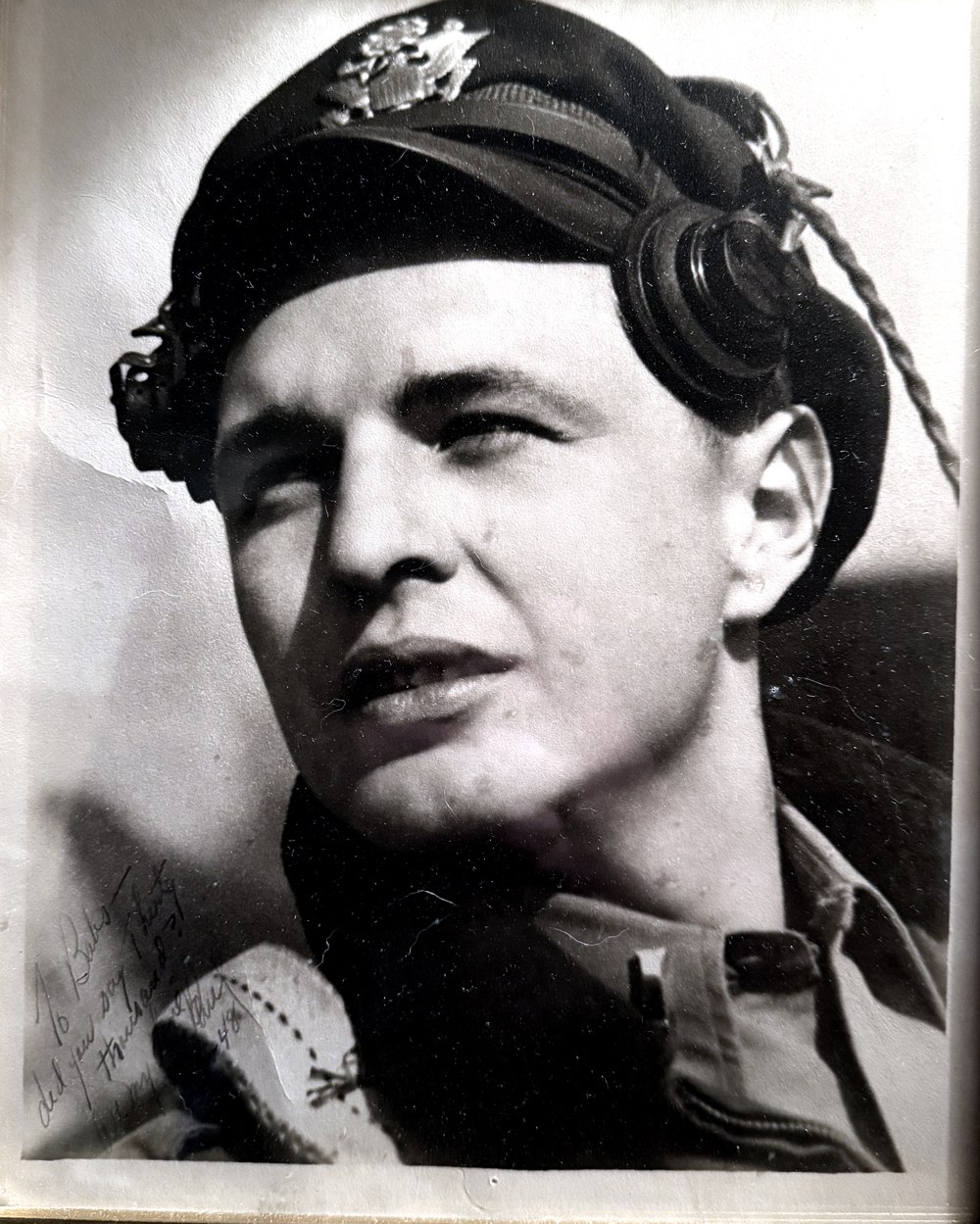
Signed WWII studio portrait of Paul Roscher in U.S. Army Air Forces cap and flight headset Signed studio portrait, 1943 · family collection
Family bloodline · WWII airman

Paul Roscher

B-17 Flying Fortress pilot · Eighth Air Force

From the married-in bloodlines comes Paul Roscher, remembered in the family as a B-17 pilot in World War II. He flew the Boeing B-17 "Flying Fortress" on daylight bombing missions over occupied Europe, among the most dangerous jobs of the war, where a bomber crew's odds of finishing a full tour were, for long stretches, worse than even.

The aircrews were awakened at 4 a.m. … at our base at Bassingbourn, just south of Cambridge in England. … Our airplane was riddled with cannon shells and machine-gun bullets by the time the third wave of fighters hit us.A 91st Bomb Group B-17 pilot, on a February 1944 mission over Germany, the world Paul Roscher flew in

Most impressive: young men like Roscher climbed into unpressurized, unheated aircraft at 25,000 feet, into temperatures of −40° and walls of flak, and did it again the next morning. His signed 1943 studio portrait, cap badge and flight headset and all, still hangs in the family; the fuller service record is a work in progress in Sources.

Know another Tidd (or a married-in relative) who belongs here?

This gallery grows. Family stories, photographs and service records can be added to any future edition, the goal is to gather them before they're lost.